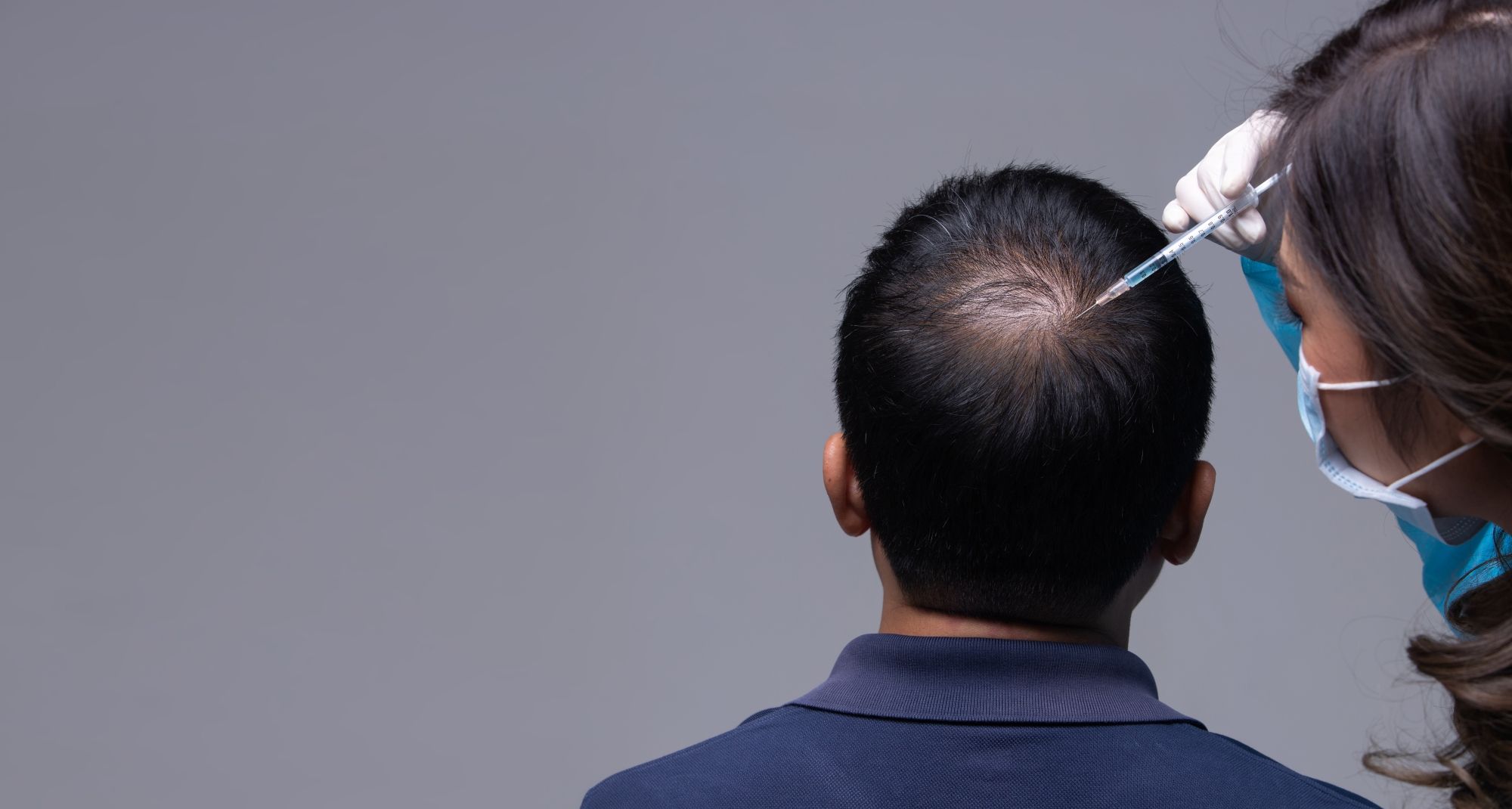
Hair Transplant
Everything You Need to Know About a Hair Transplant
A hair transplant is a proven method for restoring full, dense hair. At Dr Hakan Clinic we combine the advanced techniques of DHI (Direct Hair Implantation) and FUE (Follicular Unit Extraction) to achieve optimal results for every patient. By limiting treatment to a maximum of two patients per day and providing direct contact with Dr Hakan, we ensure personalised, high-quality care.
Why Choose a Hair Transplant at Dr Hakan Clinic?
Combination of DHI and FUE: Benefit from the advantages of both methods for an optimal result.
A maximum of two patients per day: Personal, attentive care for every patient.
Direct contact with Dr Hakan: Personal consultation and care from the treating physician.
Highly qualified team: Experienced specialists for precise, safe transplants.
State-of-the-art technology: Innovative techniques for natural, lasting results.
The Hair Transplant Process
The hair transplant process at Dr Hakan Clinic is carefully planned and performed to ensure the best possible results. Here is an overview of each step:
1. Consultation and Planning
2. Extraction of Hair Follicles
3. Implantation of Hair Follicles
4. Aftercare and Healing
1. Consultation and Planning
The first step towards a successful hair transplant at Dr Hakan Clinic is a comprehensive consultation. During this personal appointment, Dr Hakan takes the time to analyse your individual hair situation in detail and understand your wishes and expectations.
Our Approach:
- Individual analysis: Dr Hakan assesses hair density, the donor area and the pattern of your hair loss to determine the best method for your needs.
- Tailored treatment plan: Based on the analysis, Dr Hakan creates an individual treatment plan that considers both the DHI and FUE techniques to achieve optimal, natural results.
- Hairline design: Together with you, we design a natural, aesthetic hairline that perfectly suits your facial structure.
- Explanation of the process: Dr Hakan explains the entire transplant process in detail, from preparation and the procedure itself through to aftercare.
- Managing expectations: We set realistic expectations and explain the possible results and healing process so that you are fully prepared.
2. Extraction of Hair Follicles

Differences Between FUT and FUE:
With the FUT method, a linear strip of skin is removed from the donor area, which can leave a visible scar. In contrast, the FUE technique extracts individual hair follicles, leaving no linear scar and shortening the healing time. The FUE technique is more modern and precise, which is why at Dr Hakan Clinic we use this method exclusively to provide patients with the best and most natural results.
3. Implantation of Hair Follicles
Benefits of the DHI Technique
Direct implantation technology: An innovative method for precise, rapid implantation.
High precision and control: Exact placement of hair follicles for optimal results.
Faster hair growth: Faster healing and accelerated hair growth.
Benefits of the FUE Technique
Minimal scarring: No visible scars thanks to the advanced FUE technique.
Natural hair distribution: Precise placement for an aesthetic, dense appearance.
Fast healing: Shorter recovery periods enable a quick return to normal activities.
4. Aftercare and Healing
Proper aftercare is crucial to the success of a hair transplant. At Dr Hakan Clinic we guide you closely through the healing process to ensure that the transplanted hair grows optimally.
- Avoid direct sunlight: Protect your scalp from UV rays.
- Wash gently: Use mild shampoos and avoid vigorous rubbing.
- Take your medication: Take all prescribed medication as directed.
- Avoid strenuous exercise: Refrain from strenuous activities for at least one week.
- Attend regular follow-up appointments: Attend your follow-up appointments with Dr Hakan to monitor the healing process.
Suitability for a Hair Transplant
Criterion | Suitable | Not suitable |
|---|---|---|
Hair density | Sufficient donor area | Very limited donor area |
Health status | Good general health | Chronic illnesses |
Hair loss pattern | Progressive hair loss | Unstable hair loss pattern |
Age | Over 18 years of age | Under 18 years of age |
Motivation | Realistic expectations | Unrealistic expectations |
Risks and Side Effects
Like any medical treatment, a hair transplant involves potential risks. However, these are rare and can be minimised by choosing an experienced clinical team. Possible risks include:
- Infections: Minimized through sterile techniques and careful aftercare.
- Scarring: Minimal with the FUE technique, visible with the FUT technique.
- Swelling: Temporary and treatable with medication.
- Bruising: May occur around the transplanted areas and usually disappears within a few days.
- Dissatisfaction with the results: Precise planning and modern techniques help ensure a natural, aesthetic result.
- Hair loss: Temporary hair loss after the transplant is normal and part of the natural healing process.
Important: Dr Hakan and his experienced team are always available to discuss potential risks and provide you with the best possible care.
What to Do After a Hair Transplant
Do
Avoid direct sunlight: Protect your scalp from UV rays to support healing.
Wash gently: Use mild shampoos and avoid vigorous rubbing of the transplanted areas.
Take your medication: Take all prescribed medication as directed to support healing.
Avoid strenuous exercise: Refrain from strenuous activities for at least four weeks to prevent complications.
Keep your head still: Avoid unnecessary head movements so that the implanted hair follicles are not disturbed.
Don't
Allow direct sunlight: Unprotected sun exposure can impair healing and cause discolouration.
Rub the transplanted areas vigorously: This can damage the hair follicles and impair growth.
Ignore prescribed medication: This can delay healing and increase the risk of infection.
Engage in strenuous exercise: This increases the risk of swelling, bruising and other complications.
Use inappropriate scalp care: Avoid applying harsh chemicals or styling products to the transplanted areas.
Highlights of a Hair Transplant at Dr Hakan Clinic
Individual treatment plans: Tailored solutions for every patient.
Highly qualified team: Experts in precise, safe transplants.
State-of-the-art technology: Innovative methods for the best possible results.
Personal care: Direct contact with Dr Hakan for individual consultation.
Natural results: Aesthetic, lasting hair growth.